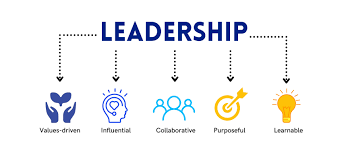
Leadership Definition:
Leadership is the ability to guide, influence and support individuals or teams toward a
shared vision and meaningful goal. Effective leaders do not depend only on authority, they
communicate purpose, build trust, listen to others and help people contribute their strengths.
Leadership also requires planning, organization, responsibility, adaptability and the ability to
make decisions when challenges arise. A strong leader inspires confidence, coordinates work
fairly and focuses on achieving quality results. In academic, professional and community
settings, leadership means taking initiative while respecting teamwork and encouraging
others to work together effectively.
REFLECTION PARAGRAPH ON 1st ASSIGNMENT:
Assignment Name: “My Leadership Journey” Mid-Term Presentation — Competency:
Leadership Course: UNIV 1213: Leadership & Teamwork, Indicator 1: Offers Vision
and Purpose That Inspires Others’ Confidence and Following, Indicator 4: Produces
Quality Results, Performance Level: Advanced. In this presentation, I reflected on how my
understanding of leadership changed after studying the course material. Before taking the
course, I believed that leadership mainly meant authority, focusing on results and making
decisions alone. However, through the presentation, I explained how the trait
approach, skills approach and behavioral approach changed my perspective. I learned that
leadership is not only about being born with confidence or intelligence, but it can also be
developed through technical, human and conceptual skills. I also learned that effective
leadership requires balancing a task-oriented focus with a relationship-oriented approach.
The leadership surveys from Chapters 1–5 helped me identify my strengths and areas for
improvement. My results showed that I had a very high democratic leadership score, high
interpersonal and conceptual skills and a high relationship-oriented score. These findings
made me realize that I value teamwork, communication and supporting people. At the same
time, I identified that I need to improve my outgoing behavior, influence skills and
administrative skills. The main difficulty in completing this assignment was honestly
evaluating myself instead of only focusing on my strongest qualities. I overcame this
challenge by reviewing the survey results carefully and using them as evidence for my
reflection rather than ignoring the weaker areas.
I consider my performance advanced because I clearly connected leadership theories to my
own results, explained how my thinking developed, and produced an organized presentation
with a meaningful conclusion. This assignment showed me that a leader should not simply
give orders, a leader should build confidence, support team members and adapt to the
situation. My advice to future students is to treat leadership surveys as a useful opportunity
for self-development. Be honest about your weaknesses, because identifying them is the first
step toward becoming a more effective leader.
REFLECTION PARAGRAPH ON 2nd ASSIGNMENT:
Assignment Name: “Leadership in Action: Water Scarcity and Management in Saudi
Arabia” Leadership Fair Presentation Competency, Course: Leadership & Teamwork
103, Indicator 2: Effectively Plans and Organizes Projects, Indicator 3: Effectively
Delegates Responsibility and Coordinates Group Work, Performance Level:
Advanced. This group presentation examined water scarcity in Saudi Arabia and the
leadership actions needed to achieve long-term water security. My group explained that
Saudi Arabia has no natural rivers, relies heavily on old underground water sources and faces
increasing demand because the population has grown from approximately four million in
1960 to more than thirty-five million in 2022. We also discussed challenges such as
agricultural water use, declining water levels, salinity, expensive desalination, aging
infrastructure, pipeline leakage and the environmental risk of brine disposal.
The project showed how leadership is necessary when solving a national issue that involves
technology, public behavior, environmental responsibility and long-term planning. Our
presentation connected Saudi Vision 2030 initiatives with practical solutions, including
desalination, wastewater reuse, rainwater collection, smart water meters, leak detection,
solar-powered water plants and public awareness programs such as Qatrah. We also
emphasized leadership traits such as adaptability, vision, empathy, global stewardship and
the ability to inspire people to save water. Preparing a ten-slide group presentation required
planning the content in a logical order, coordinating ideas and ensuring that the final project
explained both the crisis and possible solutions.
One difficulty was simplifying a complex topic without losing the importance of the
evidence. Water management includes technical, environmental, economic and social issues,
so it was challenging to present the information clearly for an audience. We addressed this by
organizing the presentation into sections: the history of the crisis, current challenges, national
solutions, leadership traits, and recommendations. I consider my
performance advanced because the final presentation was comprehensive, well-structured,
connected theory to a real national challenge and included credible references. My advice to
future students is to divide a complex group topic into clear sections, agree on a shared
outline early and make sure every team member’s contribution supports one central purpose.

